
The room in 360 degrees
A spherical panorama of the inside of the museum, made by Flavio Chiesa and published on Google Street View.
The panorama is a Google service: when it loads, Google receives your IP address and may set cookies. It only loads if you ask for it.
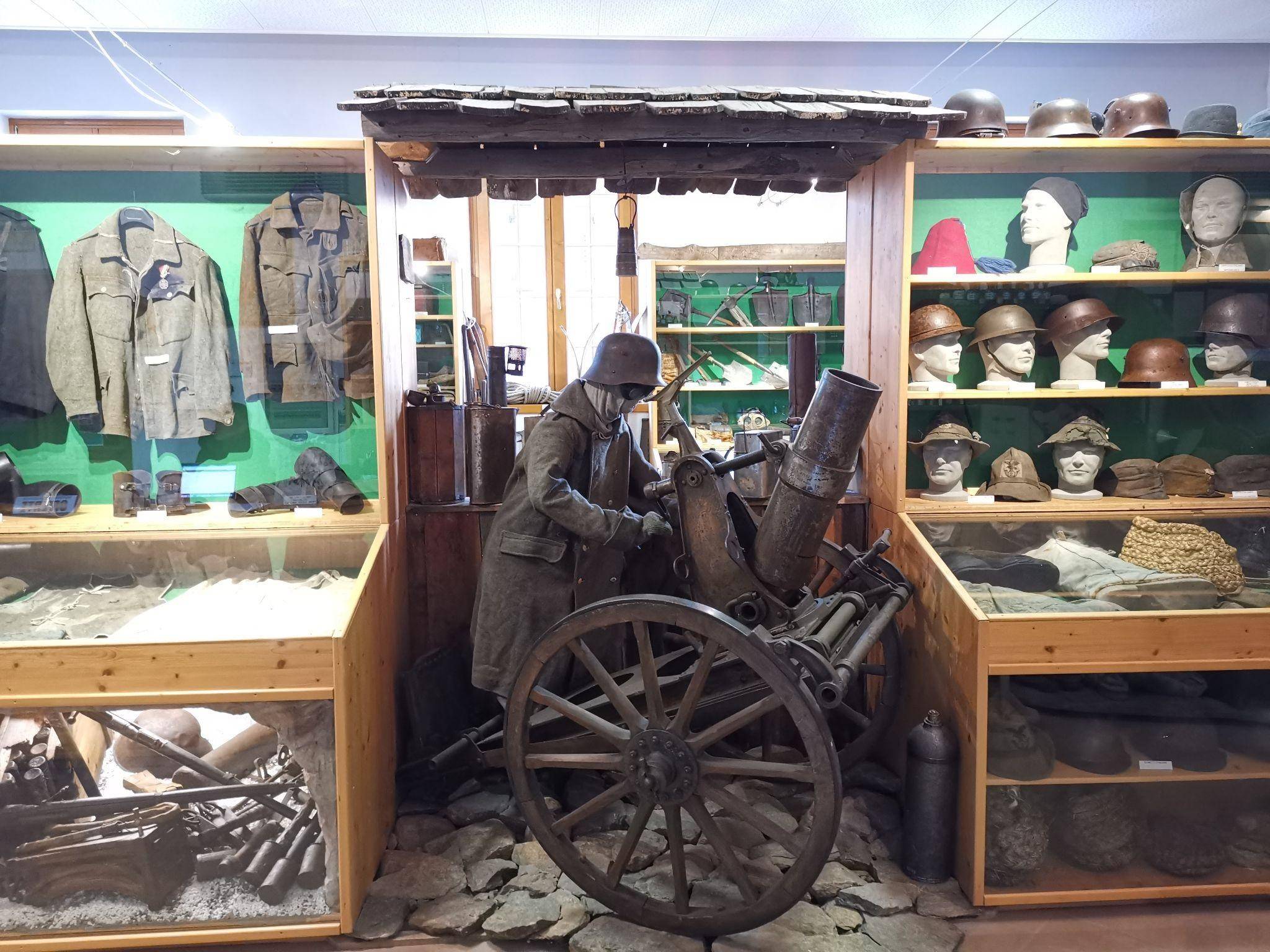
Škoda mortar, 1917
A rare piece, built for the mountains by the Czech firm Škoda: a short, wide carriage, designed to destroy trenches and barbed-wire entanglements rather than to hit men.
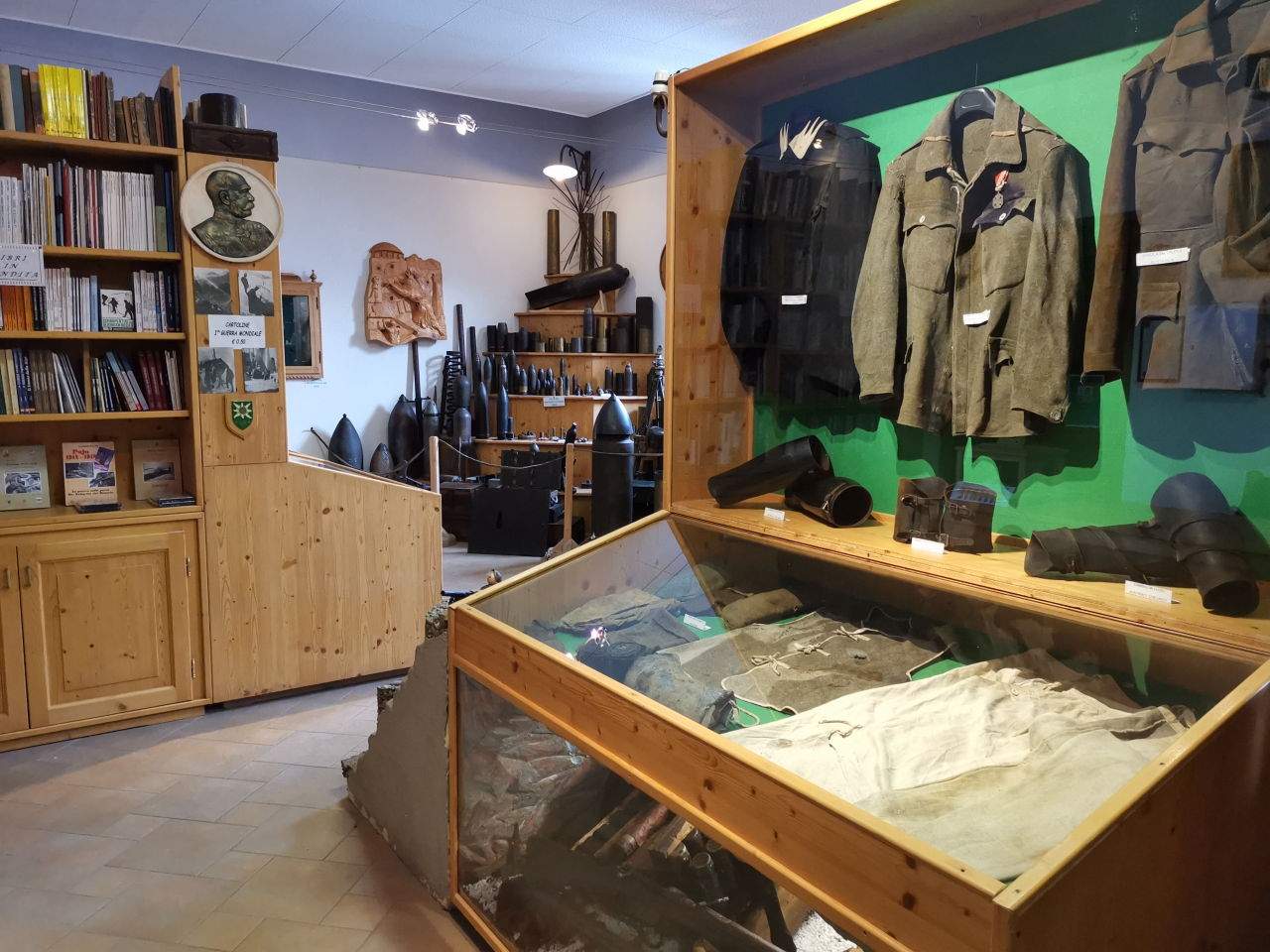
Dressed for altitude
A greatcoat, mittens with two fingers left free for shooting, goggles against the glare of the snow and a Russian-pattern cap worn under the helmet against the cold.
The helmets
Two Adrians, the French model later made in Italy, and a rare Austro‑Hungarian Berndorfer, of which about 140,000 were made.
Showcase: Dressing for the cold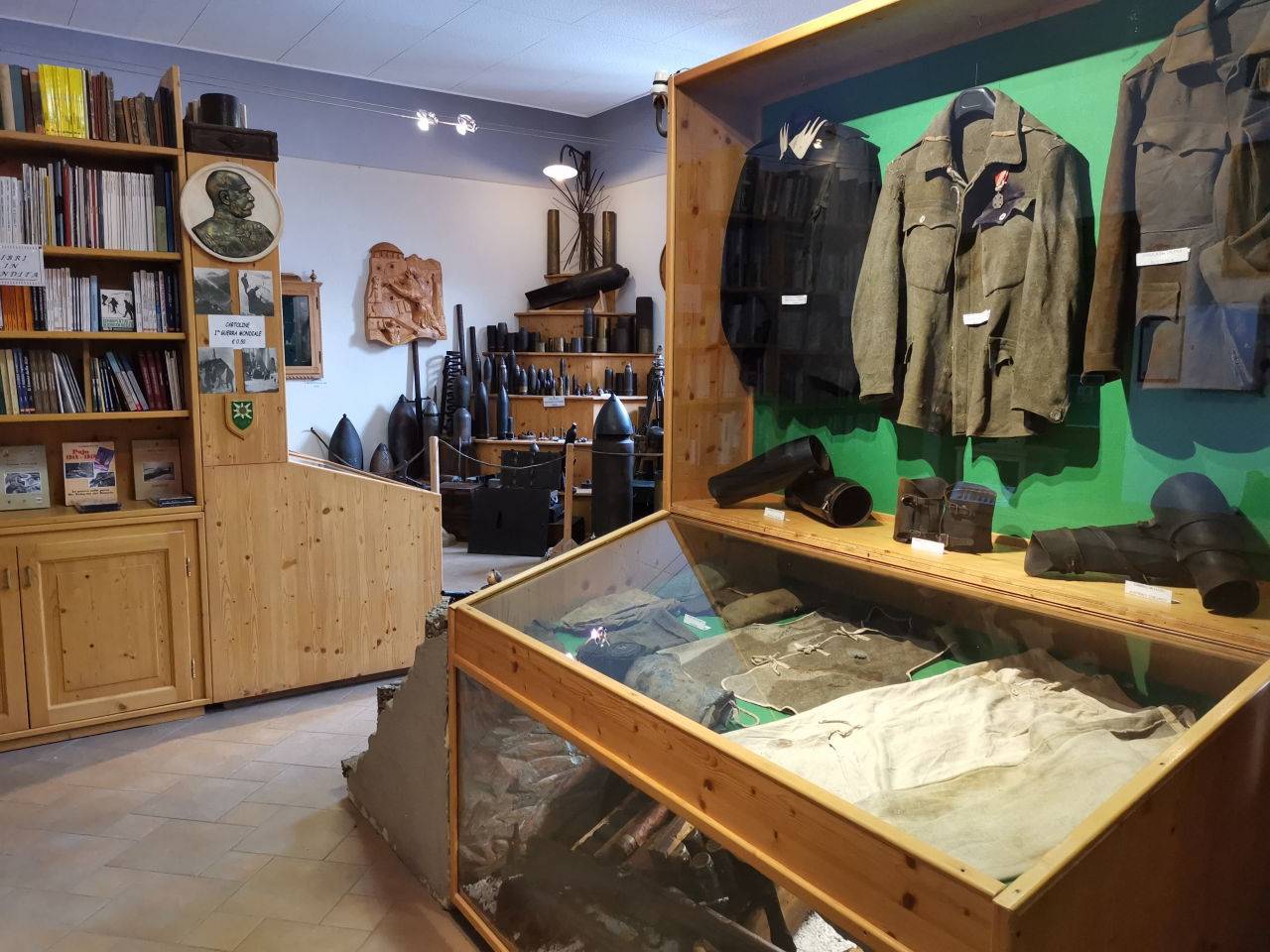
The uniforms
Items from soldiers’ uniforms. In the same room are the hats recovered from the glaciers: some have buttons bearing the likenesses of the emperors, from Franz Joseph I to Charles of Habsburg.
Shoes and overshoes
Overshoes were worn over the boots to prevent frostbite: rabbit fur or sheepskin in the early years, straw when the materials ran out.
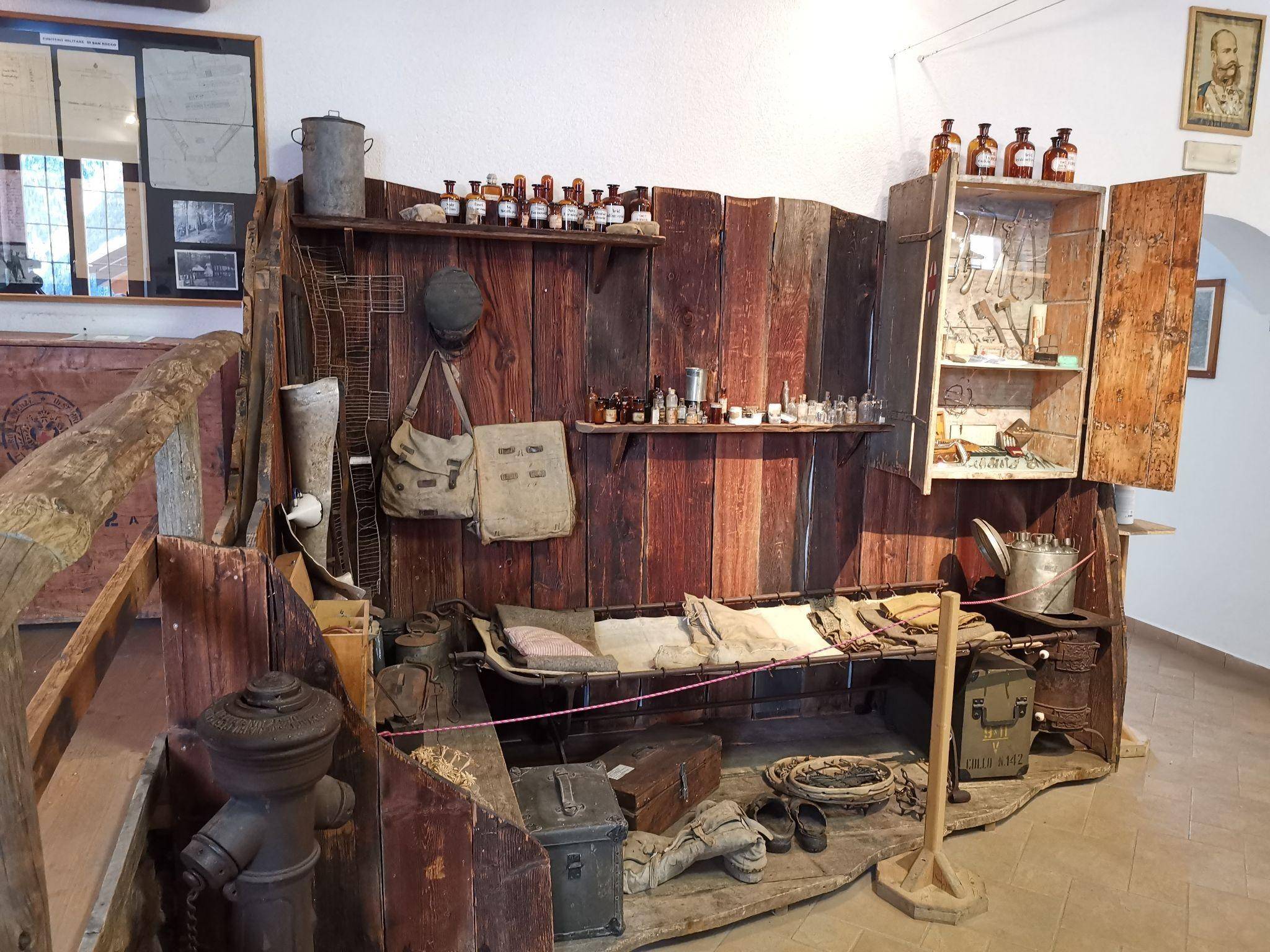
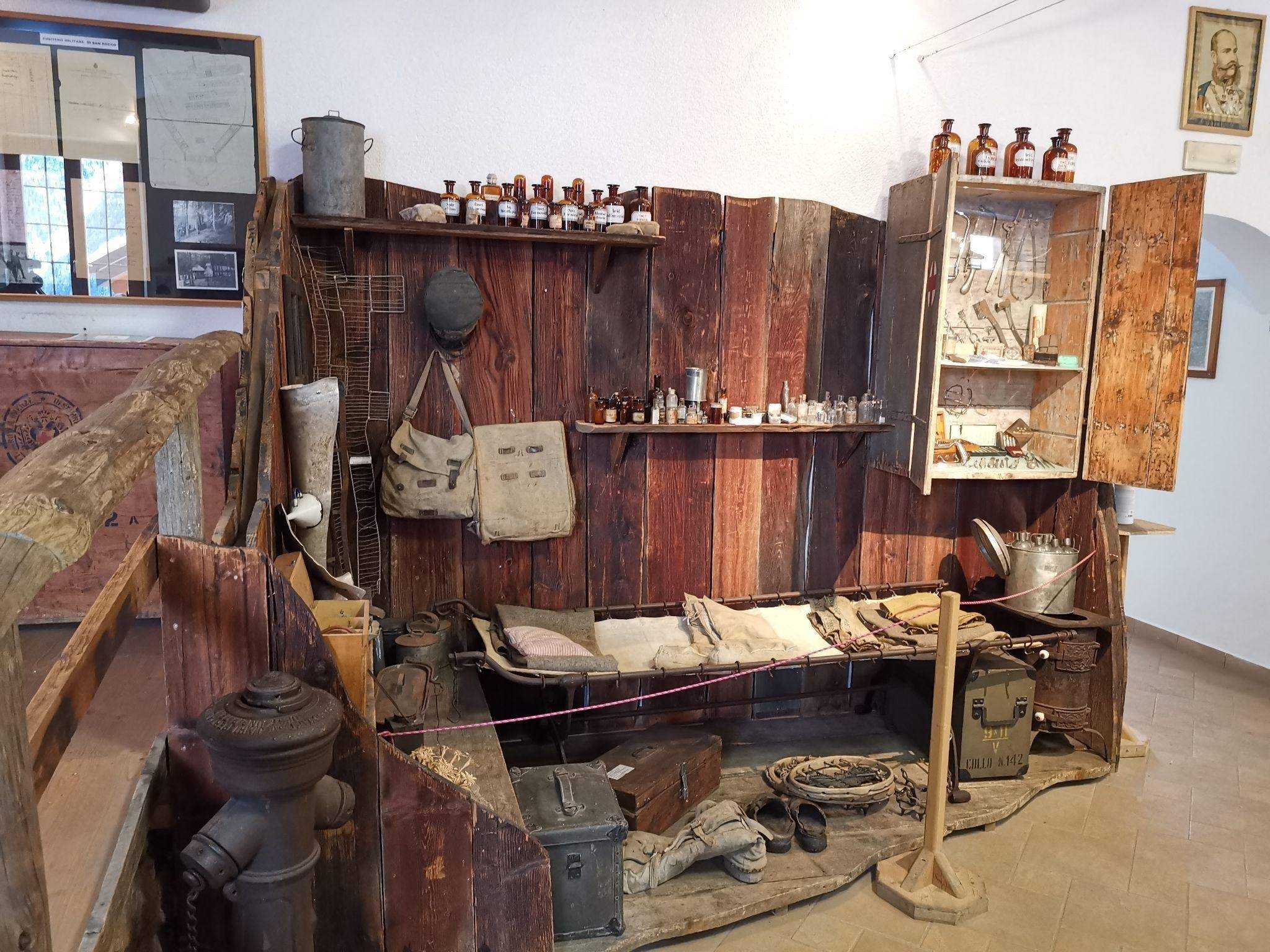
The dispensary
Bottles and phials of medicine, from Austro‑Hungarian and Italian army supplies.
The cot
First aid was given here, in the hut: care at high altitude went no further than that.
The cabinet
Instruments for first treatment. Avalanches and blizzards often killed more men than the enemy did.
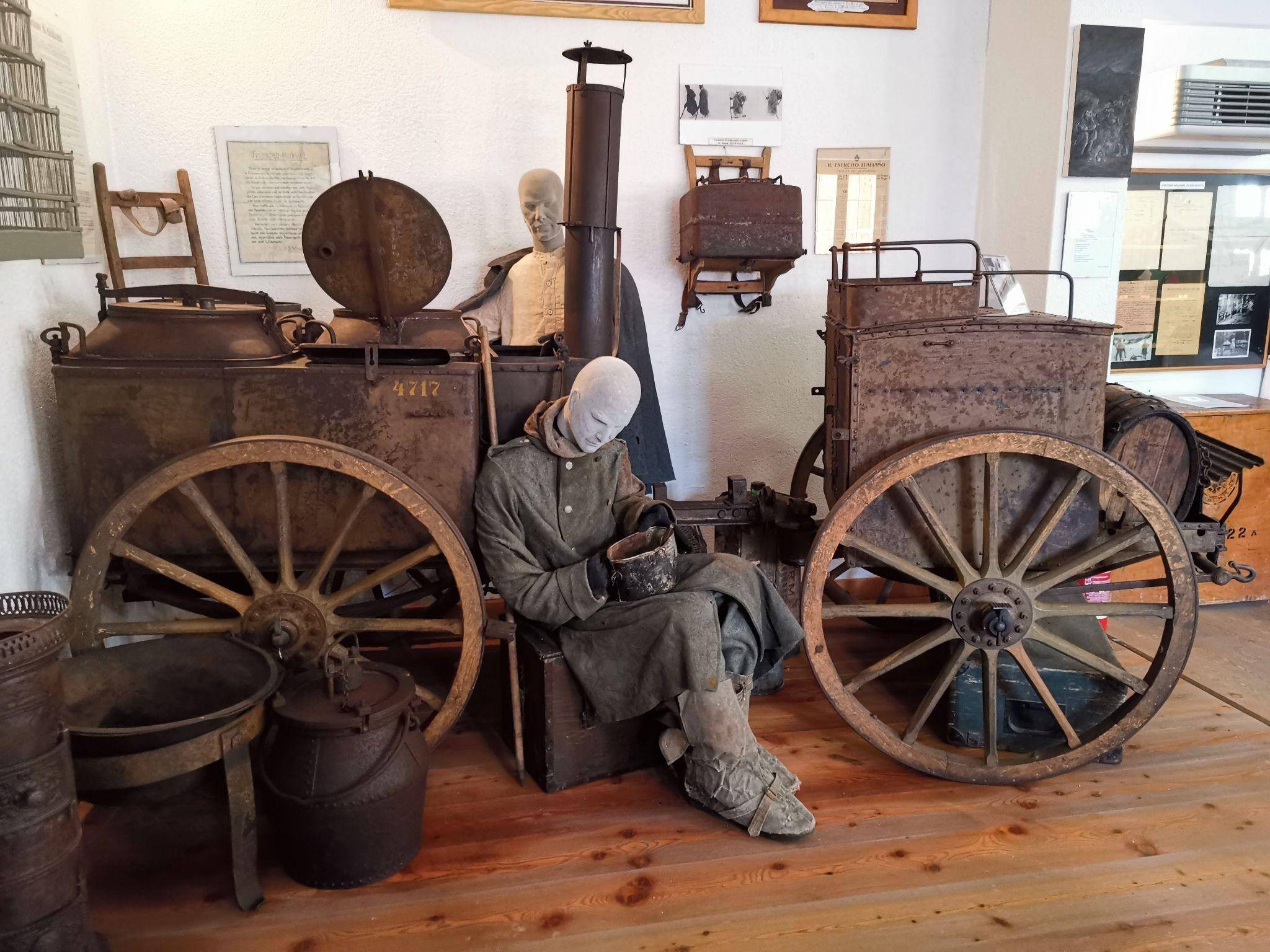
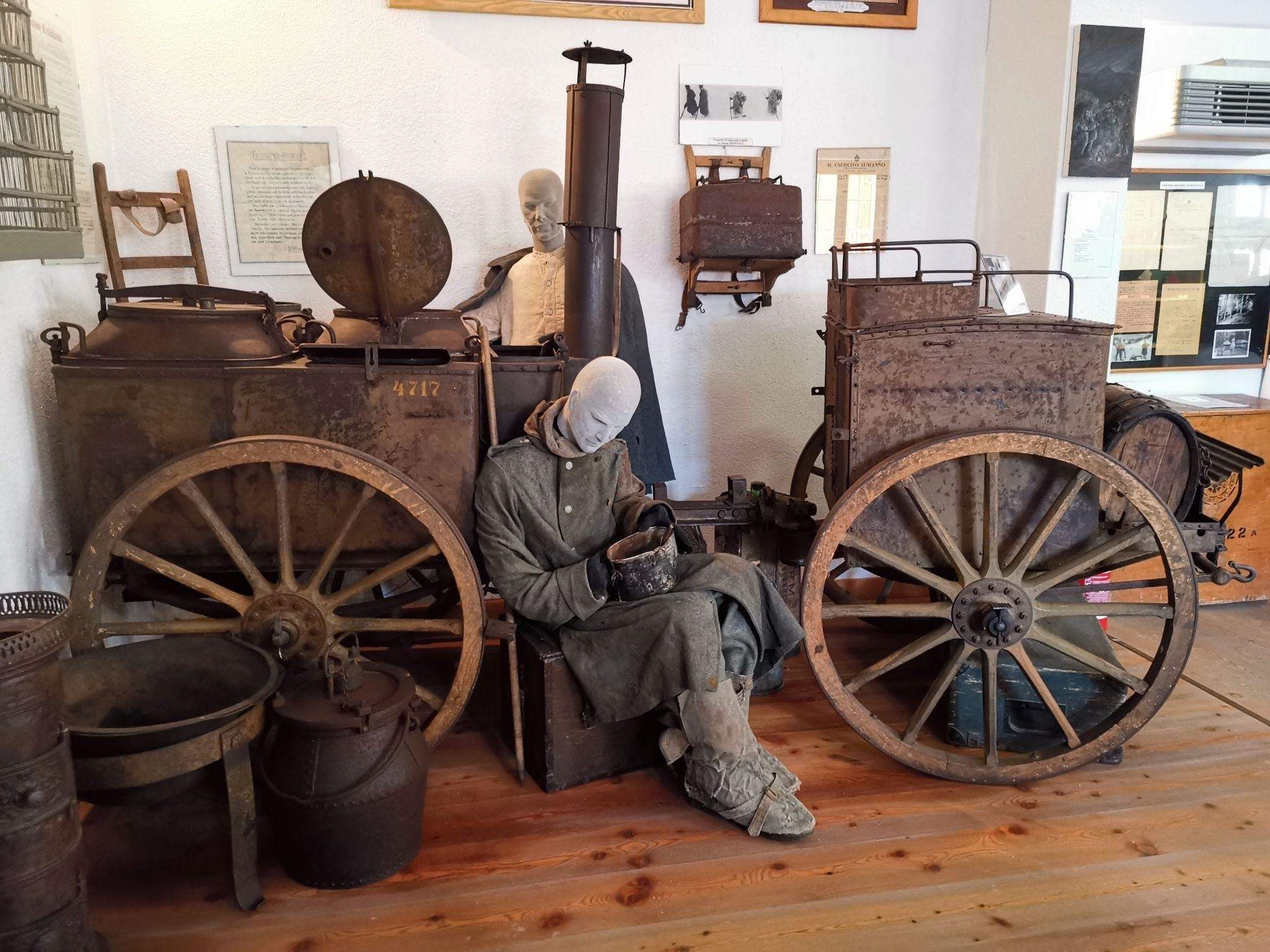
The “goulash cannon”
Five large pots, about 250 rations: they called it the goulash cannon. This one was recovered from a house in Pellizzano.
The mess tin
The first tins of meat, from 1916 and 1917, were opened however the soldiers could manage: some are on display alongside.
On wheels
The kitchen was towed wherever it was needed. Where it could not go, there were wood stoves to melt the snow.
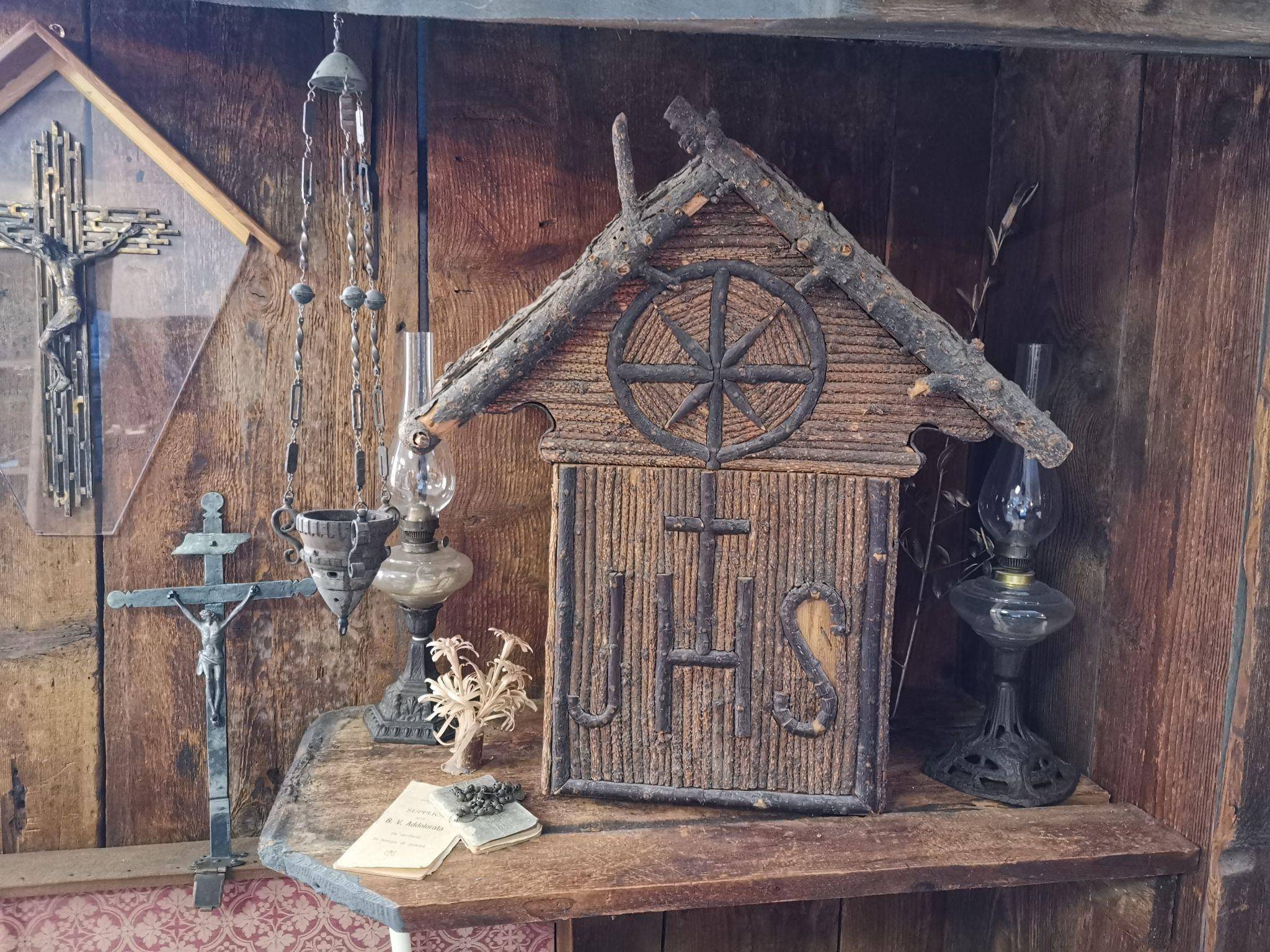
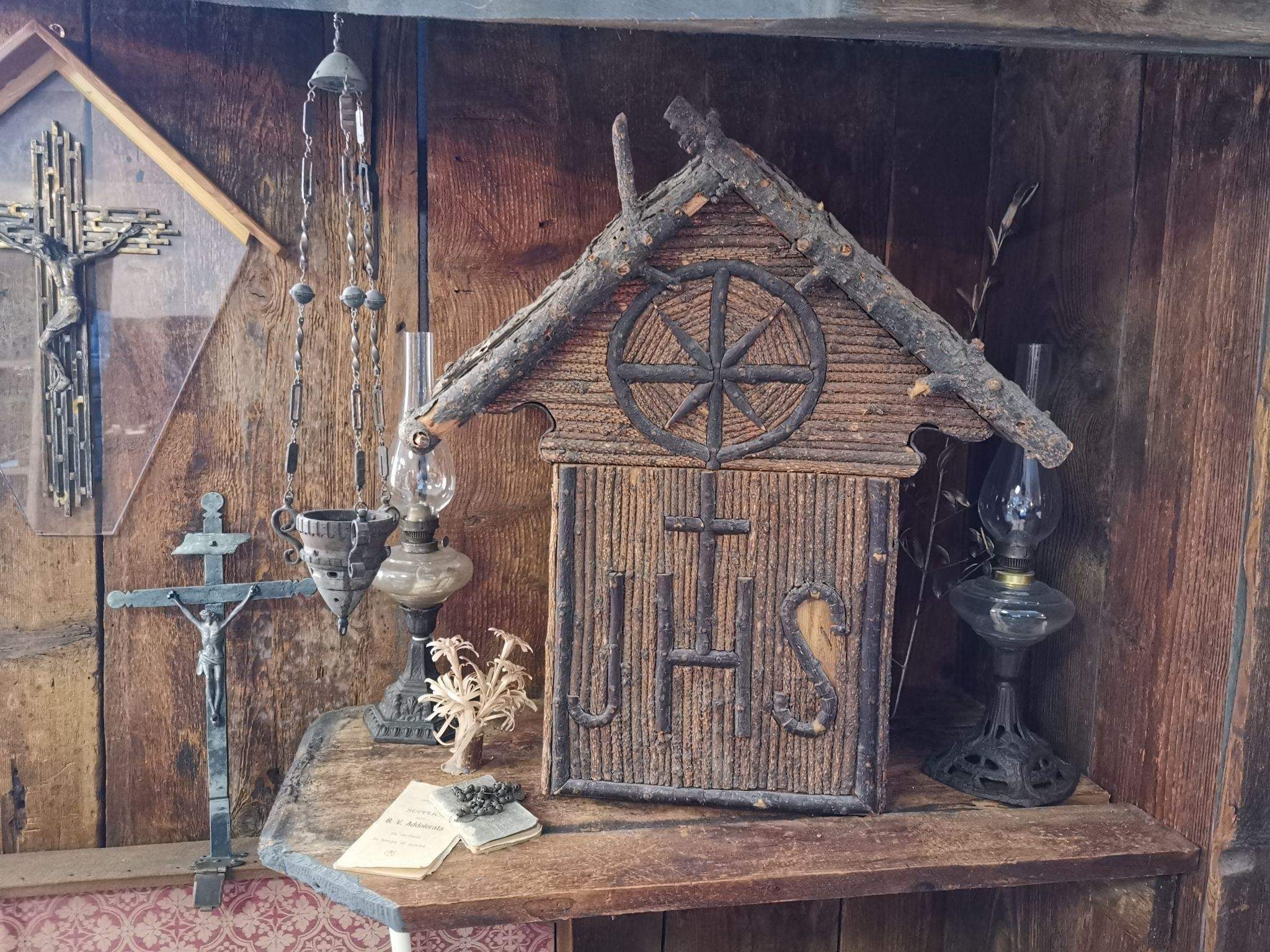
From Pian della Vegaia
Made for the little chapel at the camp, it ended up in the village parish church and was forgotten. In 2003 the sacristan gave it to the museum.
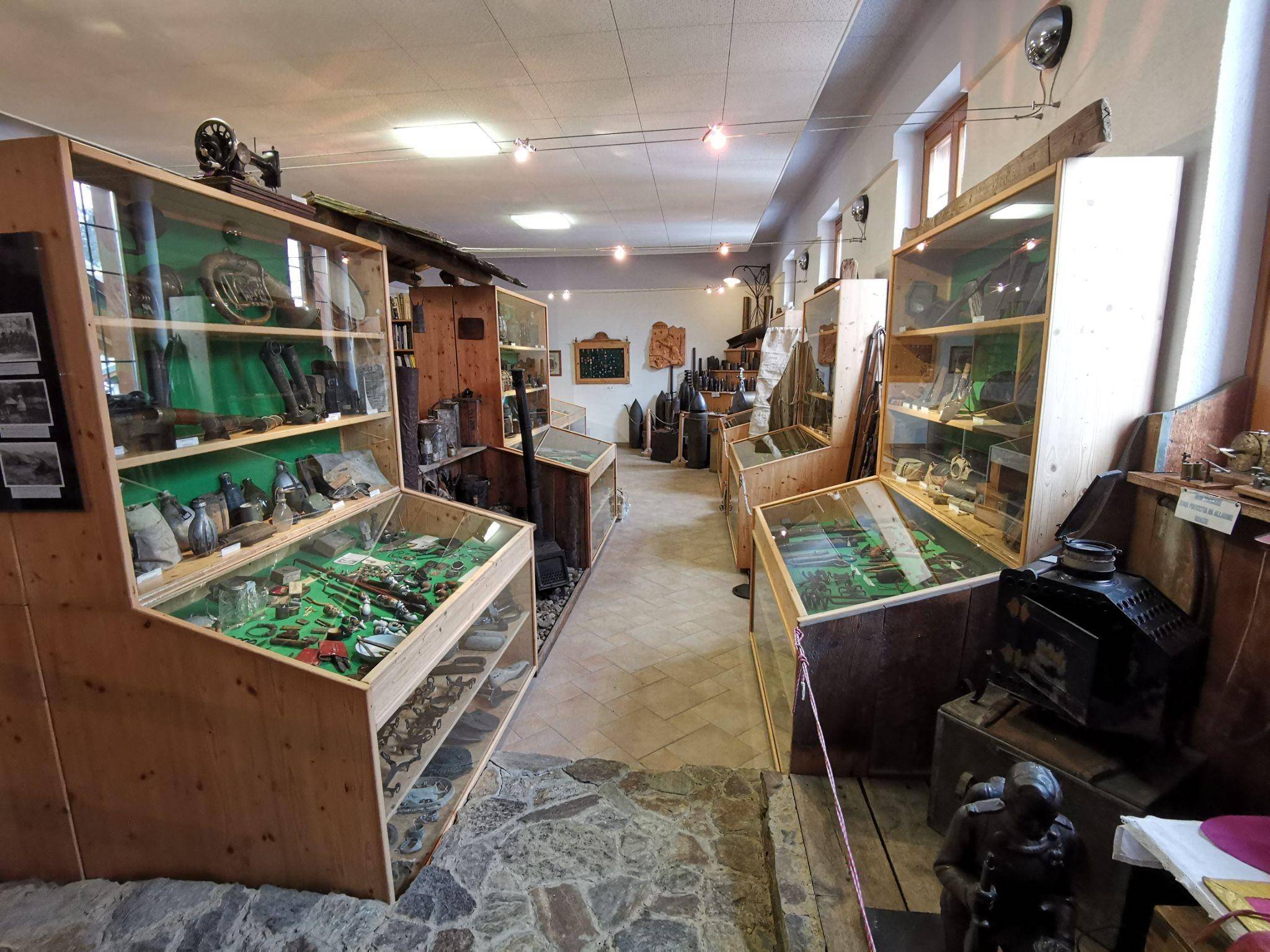
Handmade
A bullet turned into a lighter, braided wires worn as bracelets, a flattened bullet decorated with chamois hair.
At the end, the armoury
The corridor leads to the collection of weapons and shells found in the ice.
Showcase: The weapons of the White War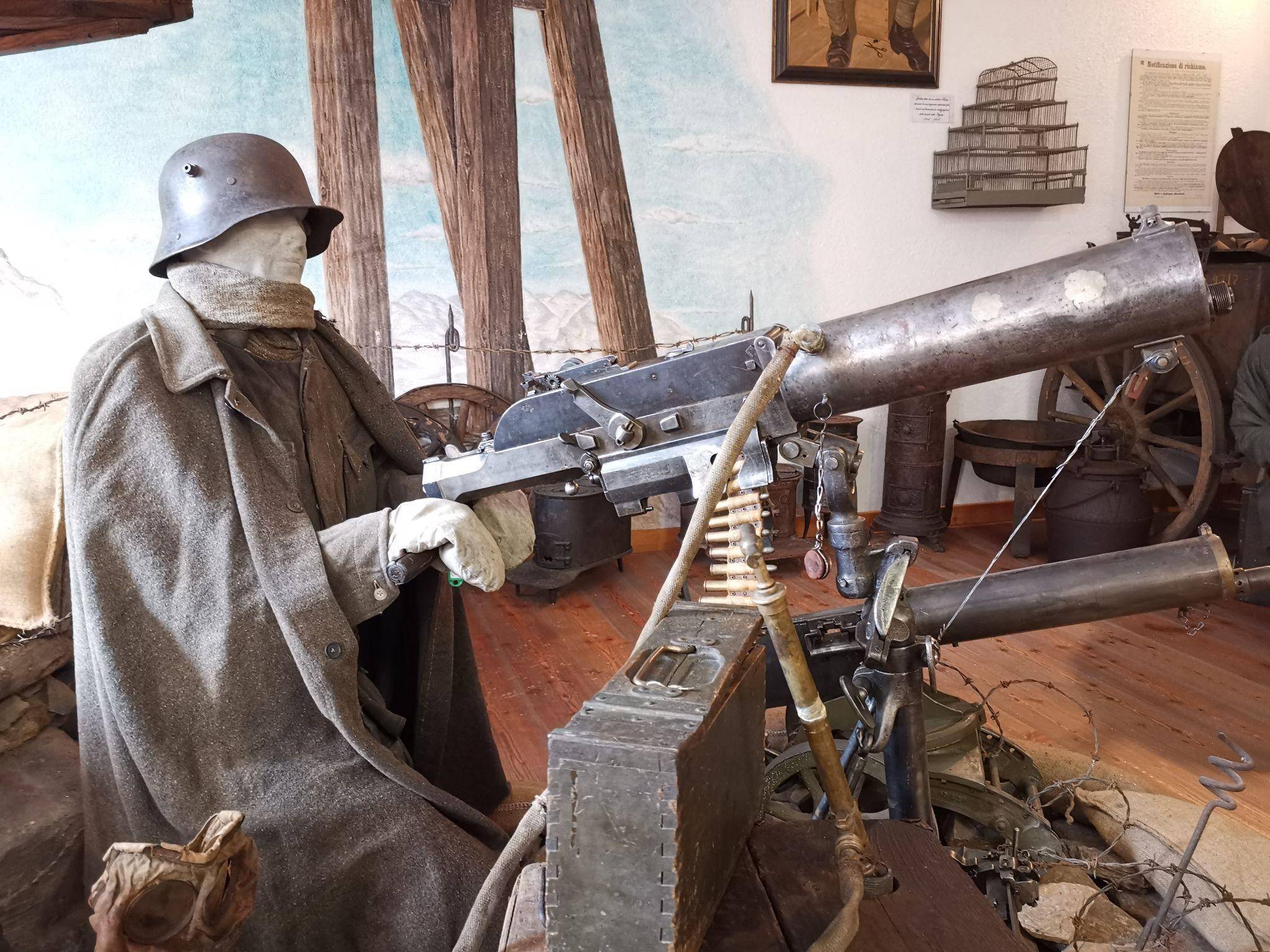
The machine gun
A machine-gun position, in the weapons room.
The ammunition
Many shells have been found in the ice: from the early models to shrapnel shells, filled with iron balls and set to burst in the air.
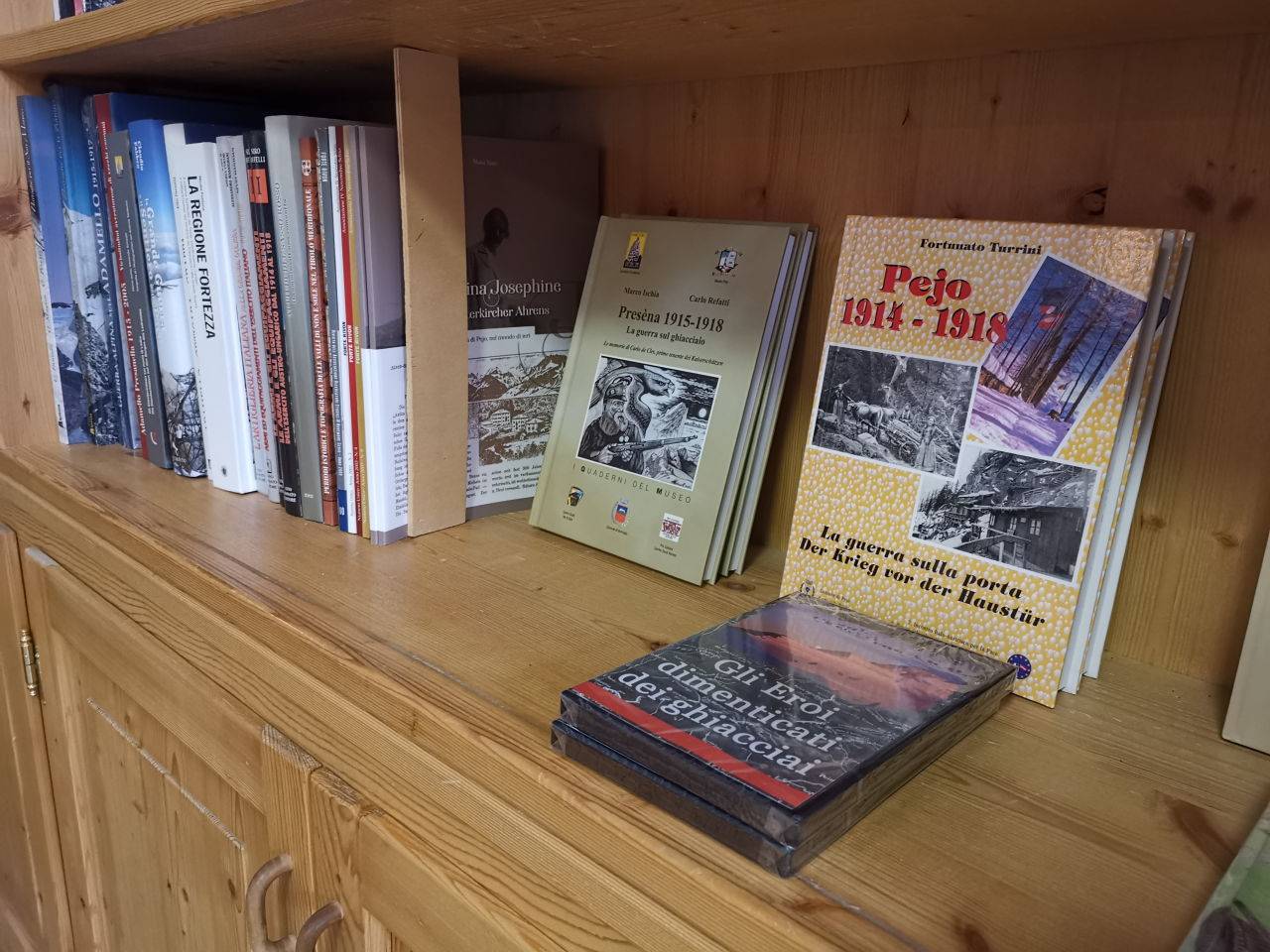
“Pejo 1914‑1918”
“La guerra sulla porta” (The war on the doorstep), by Fortunato Turrini: the same title as the museum and the association.
“Gli eroi dimenticati dei ghiacciai”
Among the books and films in the museum library (the title means “The forgotten heroes of the glaciers”).
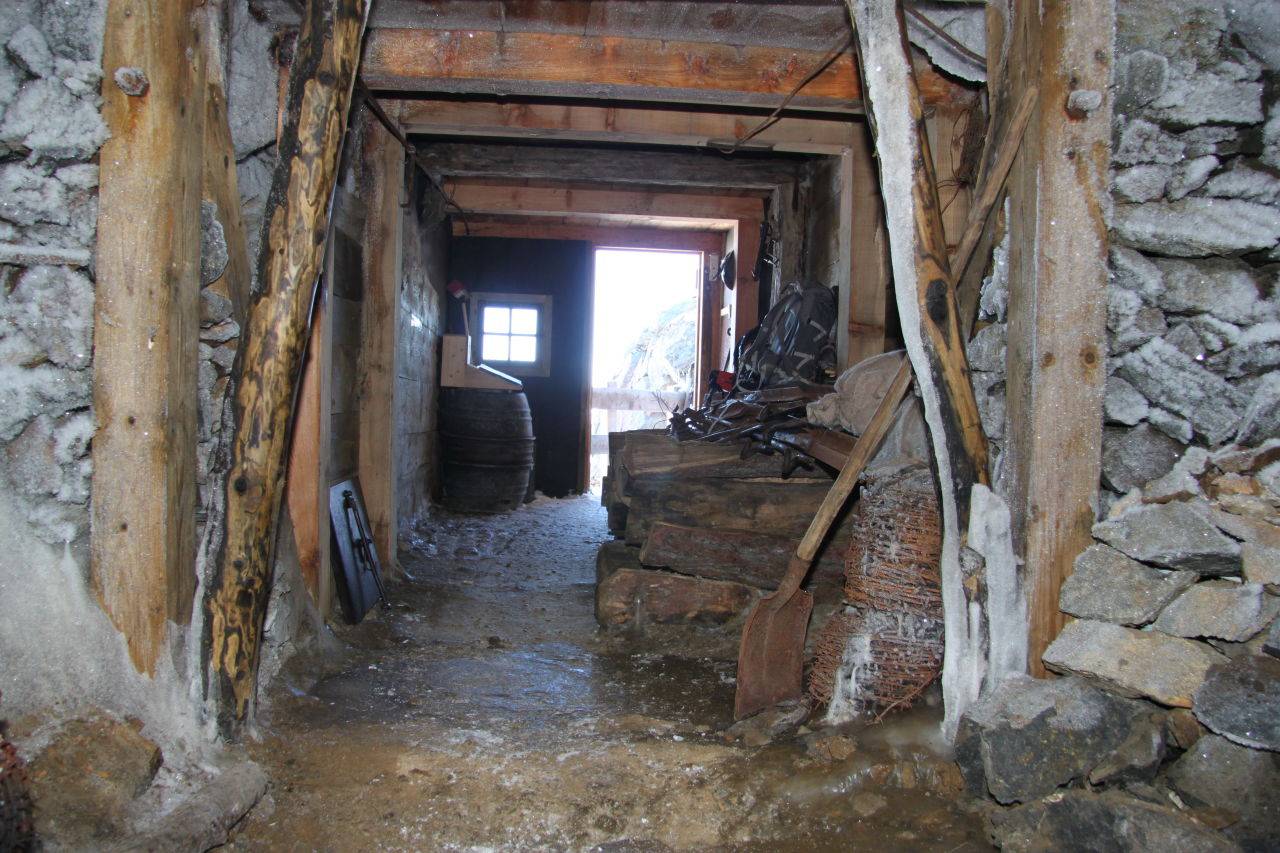
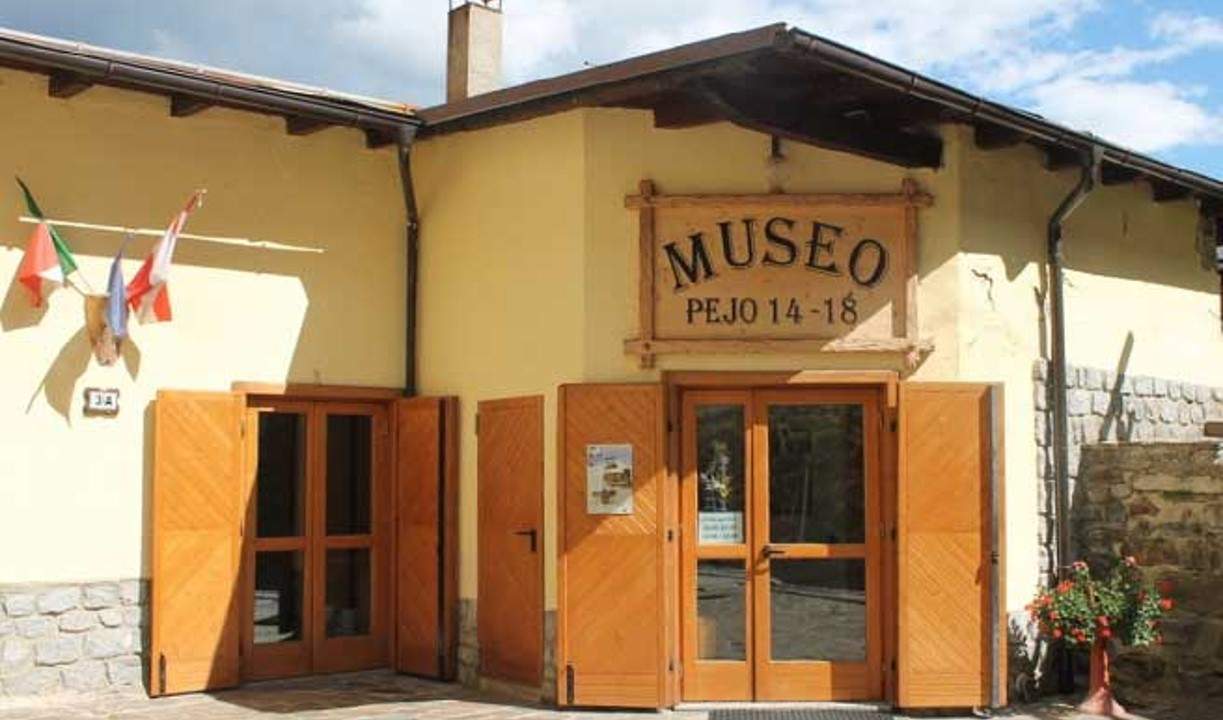
Virtual tour, ten rooms
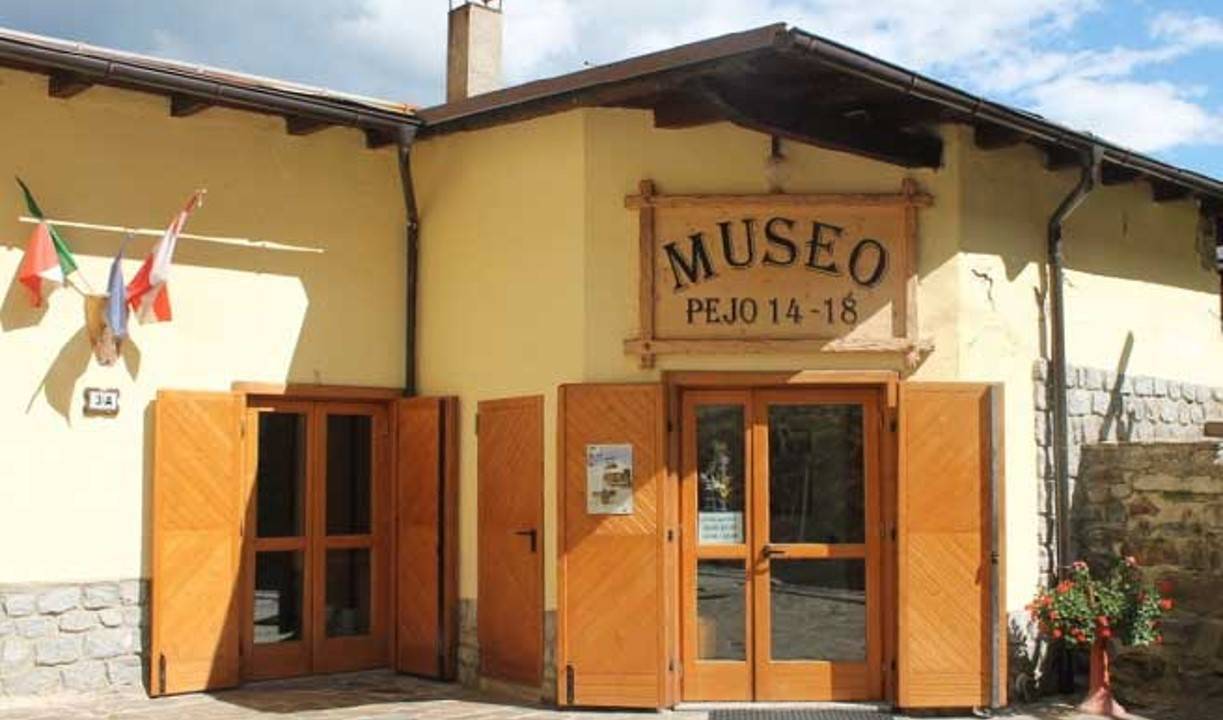
Salita San Rocco, 1
Peio Paese. From 24 May 1915 the village was right on the Tyrolean front.
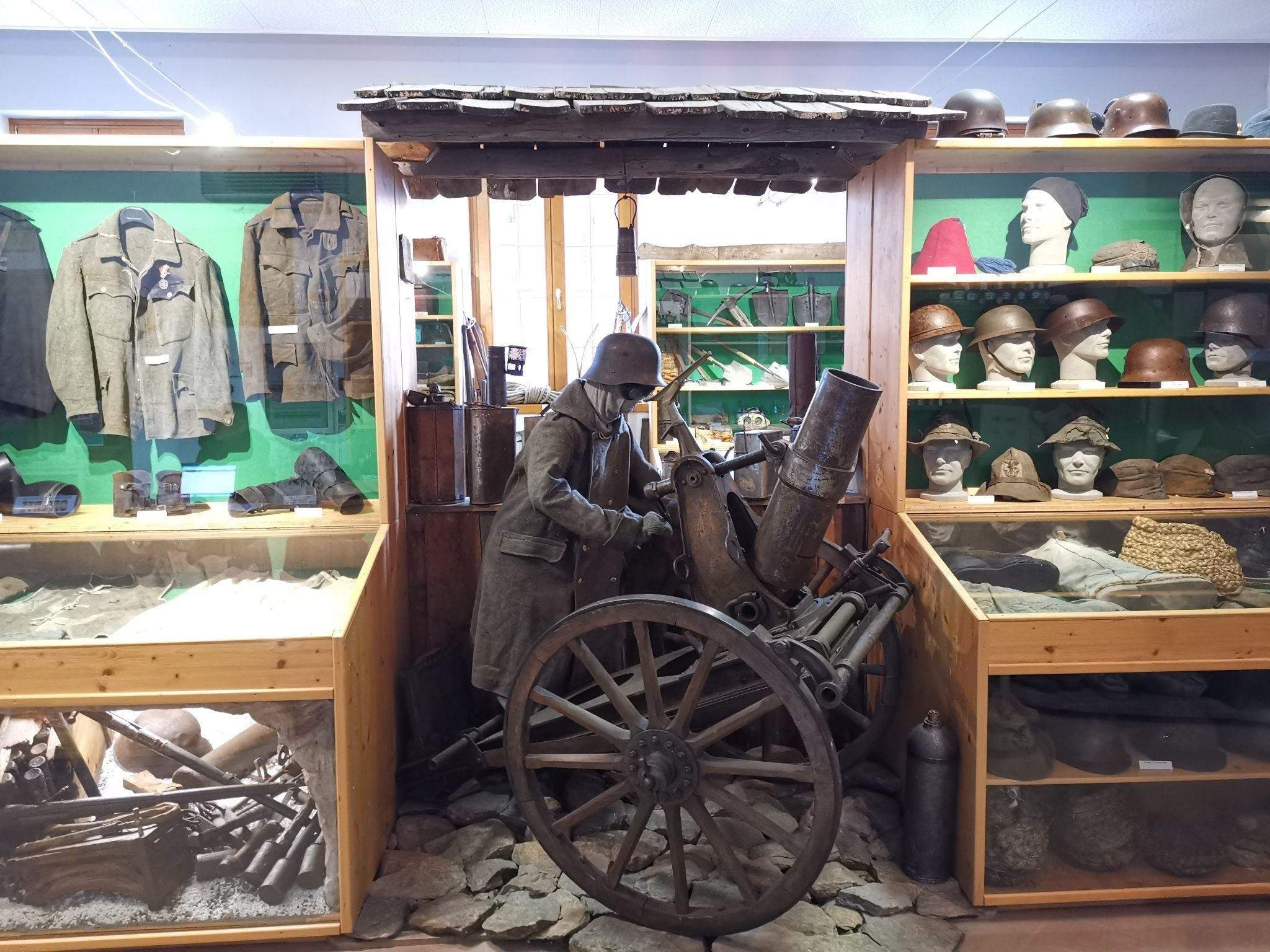
01 · Entrance
A gun position from 1917
The route through the rooms opens with a mountain mortar and the soldier manning it, dressed for high altitude.
Tap the glowing dots on the photograph: there are 3 objects to find out about.
02 · Clothing
Dressing for the cold
Uniforms, hats and shoes recovered from the glaciers. The war can be read in the materials too: plentiful at the start, poor by the end.
Tap the glowing dots on the photograph: there are 2 objects to find out about.
03 · Medicine
The sick bay in the hut
At altitude the main things treated were frostbite, ophthalmia, hunger and fractures caused by avalanches. Some of the objects come from the huts and positions high in the mountains, such as Punta Linke.
Tap the glowing dots on the photograph: there are 3 objects to find out about.
Showcase: Medicine at three thousand metresNext room: Kitchen
04 · Kitchen
Mess time
A soldier waits with his mess tin beside the field kitchen, which fed about 250 soldiers.
Tap the glowing dots on the photograph: there are 3 objects to find out about.
05 · Religious life
A tabernacle made of bark
According to eyewitness accounts, soldiers carved crosses or altars in the ice and decorated them with boughs. They made this tabernacle from twigs and bark.
Tap the glowing dots on the photograph: there is one object to find out about.
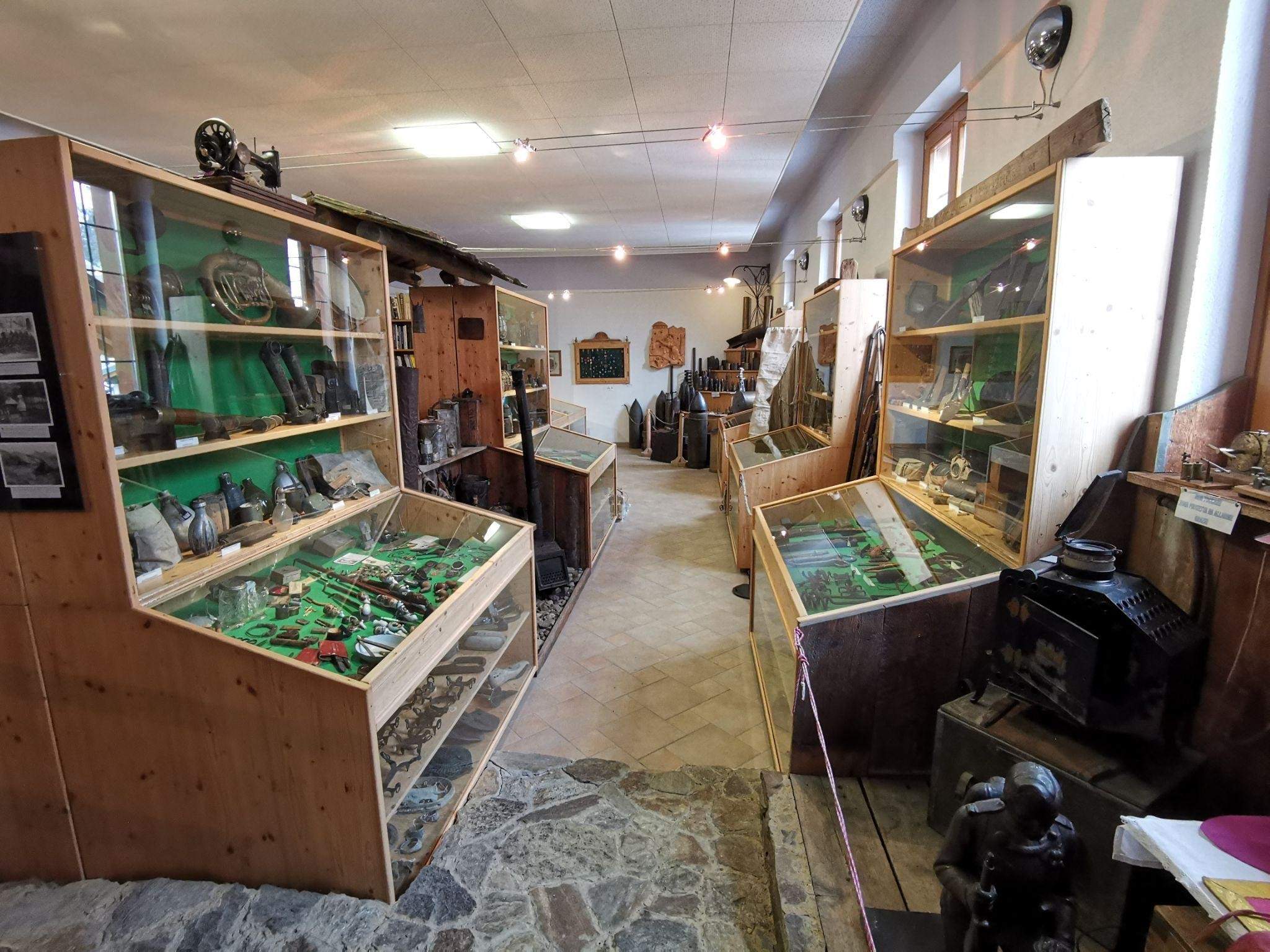
06 · Daily life
What the ice gave back
Hand-painted pipes, penknives, rosaries, a mirror with little combs perhaps used for moustaches: everyday things that have come down almost intact.
Tap the glowing dots on the photograph: there are 2 objects to find out about.
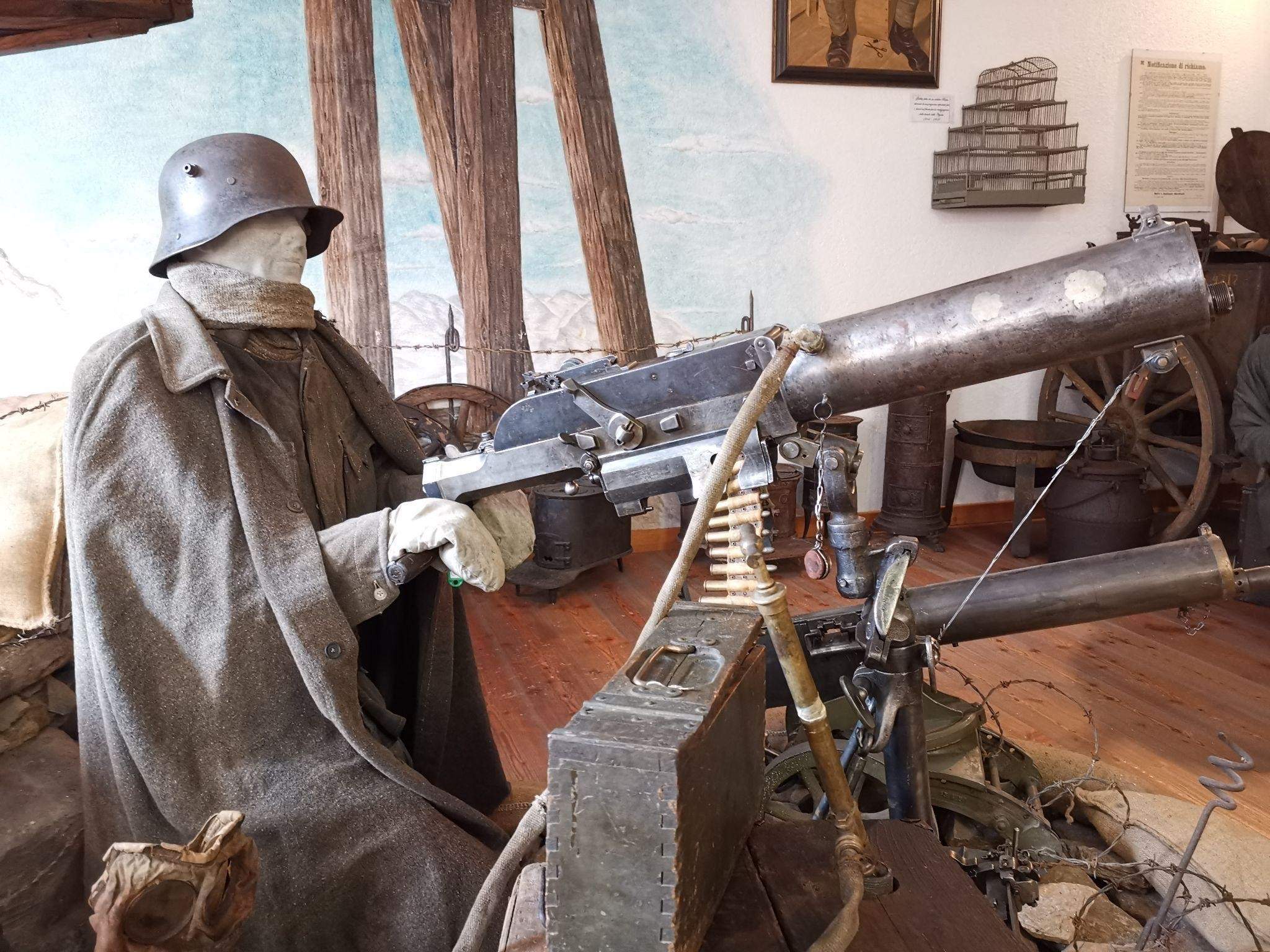
07 · Armoury
Twenty thousand rounds in one night
On 3 September 1918, in the attack on Cima San Matteo, the guns fired twenty thousand rounds: afterwards the summit was found to be six metres lower.
Tap the glowing dots on the photograph: there are 2 objects to find out about.
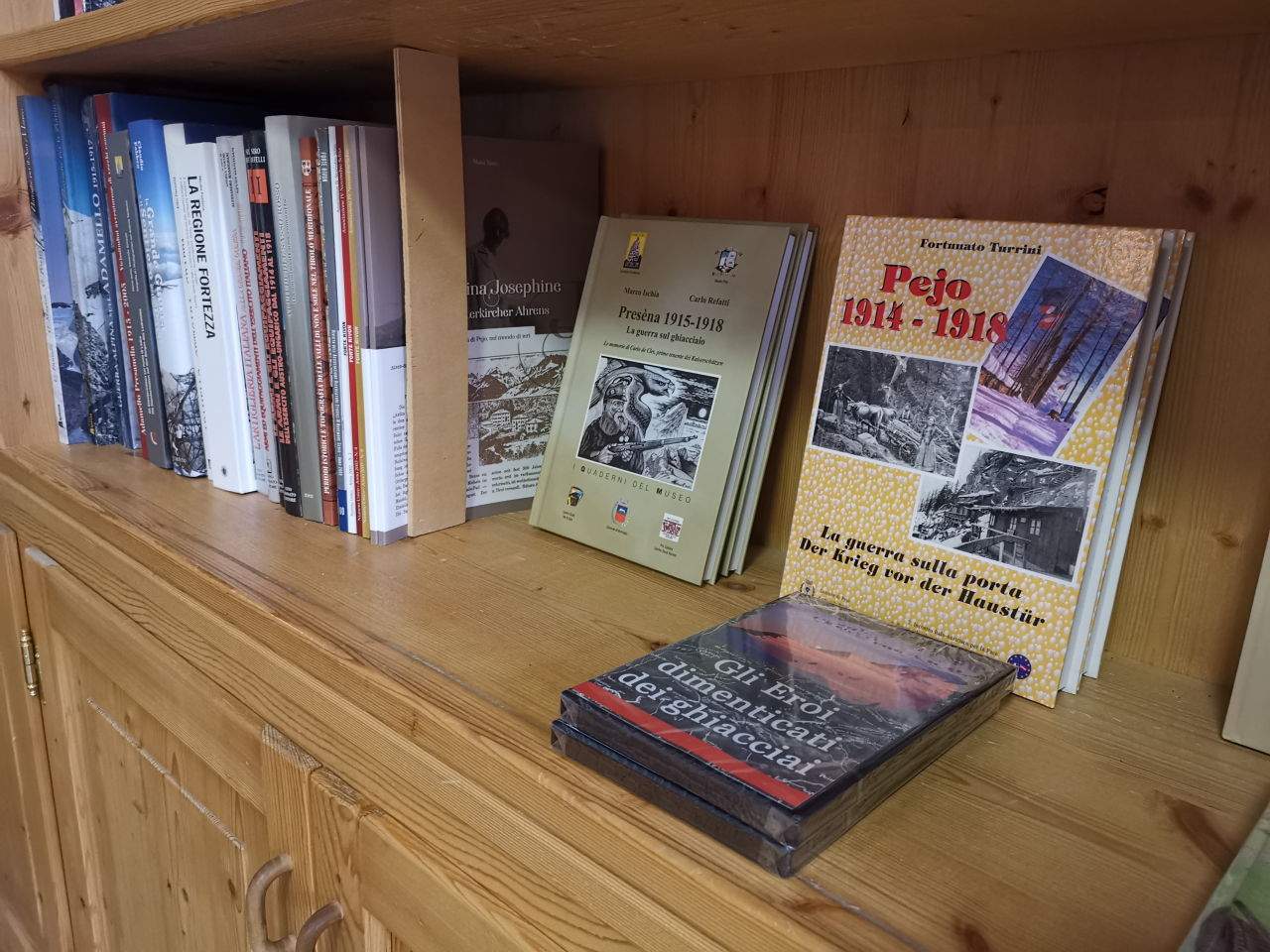
08 · Video room
Diaries, memoirs, films
At the end of the route, period films and the documentary on the battle of San Matteo, where Captain Arnaldo Berni died; he still lies buried in the ice.
Tap the glowing dots on the photograph: there are 2 objects to find out about.
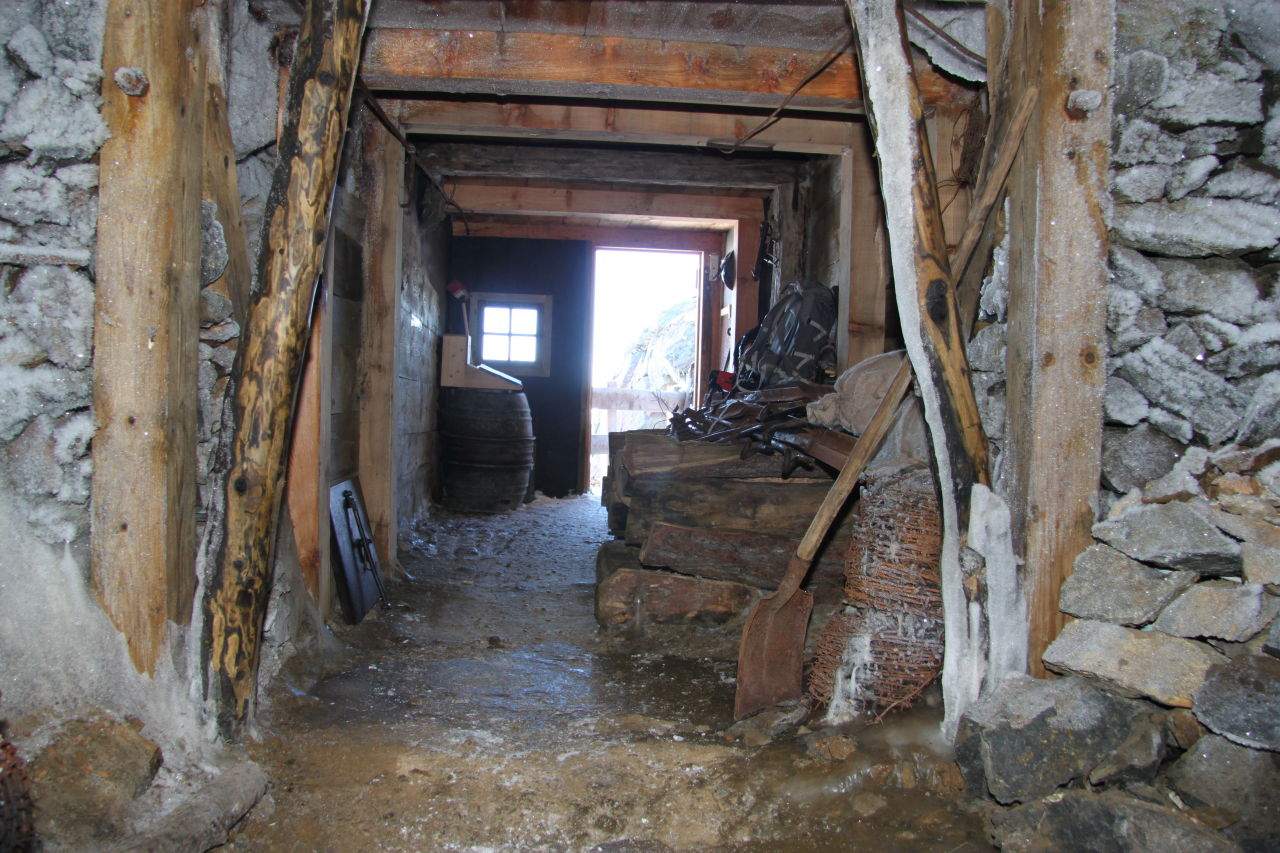
09 · At altitude
Punta Linke, 3,632 metres
The cableway tunnel opens onto the Forni glacier. It is reached in summer, on a trek for experienced hikers.